Two days after we flew home, my son sent me a video.
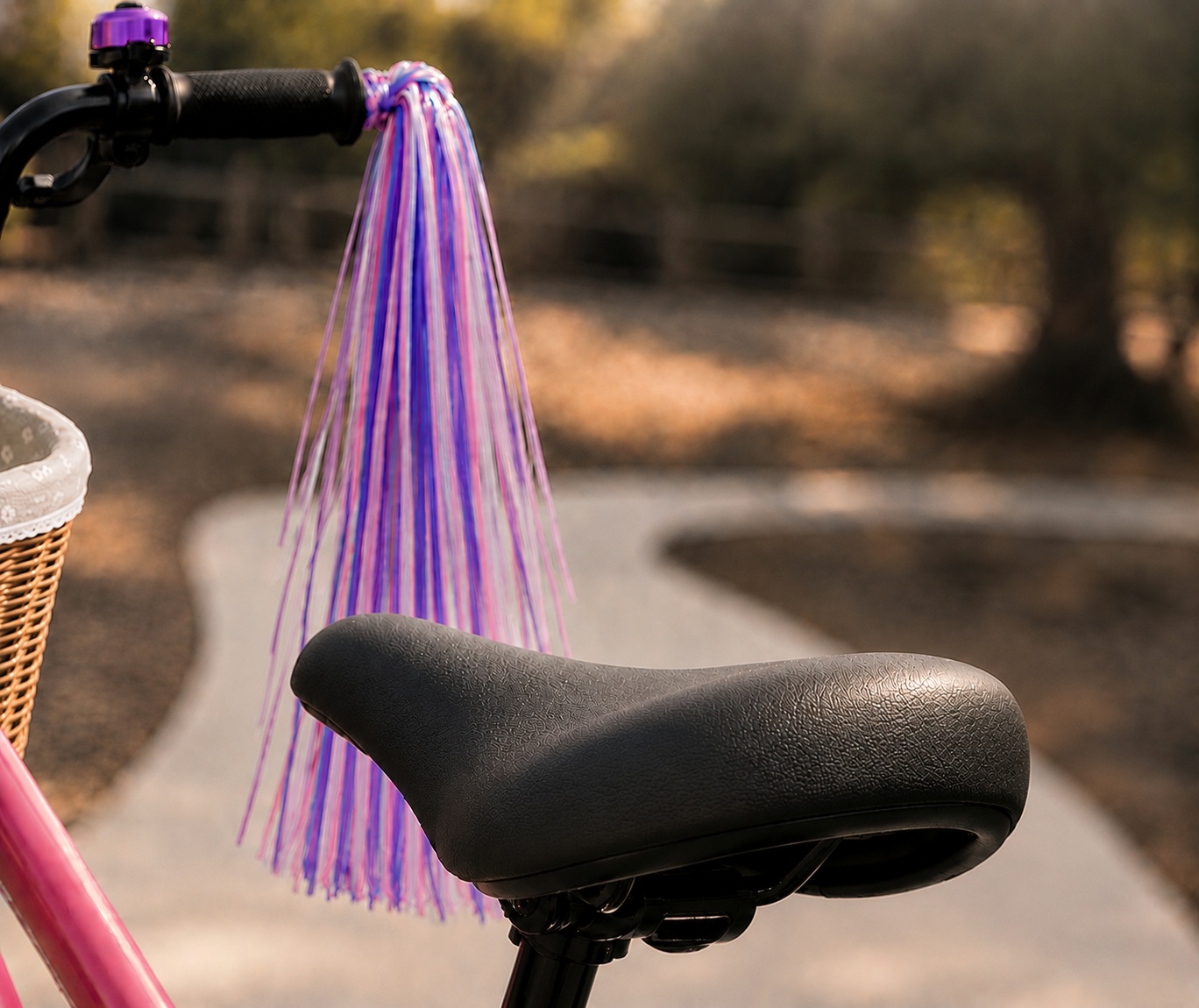
My granddaughter, just turned five, is riding a pink bicycle down a California sidewalk. There is a basket on the front and streamers on the handlebars. The bike was a birthday present, and this is the first time she has ridden it alone. Truly alone, with no one’s hand anywhere near her.
As she picks up speed, she calls out in a voice almost too full of wonder to hold itself together.
“Look, I’m doing it! I can’t believe I’m actually doing it!”
And from behind the camera, her father, my son, calls back.
“You’re doing it!”
I watched this in my study in Florida, twenty-five hundred miles away, and what swept over me took my breath.
It was joy.
What startled me was not the joy itself, because my life has been rich in joy, but that this joy came unburdened. The joys I had known before almost always arrived carrying something. This joy carried nothing. Nothing trailed behind it. Nothing tugged at its sleeve. It simply came, whole, like sunlight through an open window.
I thought about this and remembered what every parent knows when teaching a child to ride a bicycle. You run alongside, bent at the waist, one hand on the back of the seat, ready to catch what has not yet fallen.
I spent most of my life in that posture.
For more than four decades I was a physician. The joy of medicine is real. A patient improves, and there is joy in the room. But a doctor’s joy is never free of consequence, because it is tied to outcomes, and outcomes belong to a future that gives no guarantees.
One patient comes to mind who can stand for many. I will call her Lydia. She was young, newly hired into a demanding job she had worked years to win and could not afford to lose. She came with migraines so severe that she wore sunglasses in my exam room, because even dim light was too much for her eyes. When she finally took them off, I saw she had been crying. She was afraid of the pain. She was more afraid of what the pain might take from her.
I examined her. I chose a treatment. It worked. At her next visit, the sunglasses stayed in her purse, and there was joy in that room. Hers, and mine too. Mine carried the quiet satisfaction of having found the answer. But even as we smiled, the joy had already begun to thin. Would the treatment hold? Would side effects come? Could she afford it? Would the migraines return when she could least bear them?
Her future rested, in some small way, in my hands. And whatever rests in your hands can fall.
It was the same at home, only deeper. Marriage gave me joy, but not weightless joy. To love one woman for more than four decades is to carry her happiness, her health, and her peace alongside your own. Fatherhood gave me joy, but a father’s joy comes with a watchman built in. Are they safe? Are they finding their way? Are they hurting in ways they have not said? When your children’s joy becomes yours, so does their pain.
None of this joy was false. It was abundant. But it was mixed with vigilance, with obligation, with the low hum of what if. For years I assumed all joy came that way, the way wine comes with its sediment.
I was wrong.
It took a five-year-old on a pink bicycle to show me.
Sitting in my study that afternoon, I saw the law I had lived under without ever reading its terms: whatever share of the outcome is yours, that is the share of the joy that worry takes.
That afternoon, no share of the outcome was mine. I had not taught her to ride. I was not running behind her. Whether she stayed upright or fell, nothing rested on me. Her parents had done the work. Her own small body had found its balance. All of it happened while I sat in a chair on the other side of the country, with nothing to do but receive it.
So the joy came whole. A gift, weightless because it was given. No vigilance. No next decision. Just a child, a pink bicycle, and joy with nothing attached to it.
That might have been the whole lesson, a simple grace about the privileges of being a grandfather. But the video kept working on me, the way certain moments do, and it led me further.
Retirement, whatever else it takes from a man, gives one thing back. Stillness. And in that stillness I have been looking, for the first time without hurry, at the posture I held for so long. Bent at the waist, hand on the seat. Looking at it long enough to notice something I could never afford to notice while I was running.
My hand was never what held the bicycle up.
I could steady. I could guide, encourage, correct. I could place my hand where love and duty asked, and I would do it again. But I could not ride for another person. I could not make every patient well. I could not shield my family from every hurt. I could not keep every life from falling by the force of my concern alone.
Then what was holding them?
The answer came slowly, not as a new thought, but as an old truth finally visible.
It was not me alone.
That is what I had missed. Not that my hand did not matter. It mattered. My training mattered. My decisions mattered. My love mattered. But there is a difference between the hand that steadies and the thing that keeps a child upright. For most of my life I had confused the two.
A child does not stay up because a hand is on the seat. She stays up because the world beneath her holds. The hand only helps her trust what was already there.
All those years with patients, I thought their future rested in my hands. Some part of it did. But not the deepest part. Beneath my skill, beneath my worry, beneath every decision I made, something was already holding what I could not.
And with my family, I thought love meant staying close enough to catch whatever might fall. Some part of that was true. Love does stay close. Love does steady. But even the deepest human love has limits. My vigilance could not reach everywhere. My concern could not keep them from every fall. And still, somehow, we were held.
That may be the greater revelation. I had spent my life believing I was the one keeping others upright. But I was also being kept. I thought I was the steady one, the responsible one, the one preventing collapse. In fact I was moving through my own life on a balance I did not create, over ground I did not lay, upheld by something I did not have to understand in order to depend on it.
The hand I thought was mine was never the thing that mattered most.
I had been asked to place my hand on the seat, not to become the source of the balance. I had been asked to practice medicine with skill, to love my wife, my sons, and the family that has grown around them with devotion, to stay close, to steady, to catch what I could. I had not been asked to hold the world still. That was never my work. The ground was already there before I bent down to help, and it remained under me even when I imagined the weight was mine.
So now, when I watch the video again, and I have watched it many times, I find I am no longer only watching her.
I see the man behind the camera, calling out. And behind him, twenty-five hundred miles east, in a quiet study in Florida, I see another man, a doctor, retired now, who has finally loosened his grip. Not on his love. Not on his duty. Only on the old illusion that love required him to hold every life upright. I see him the way you only ever see yourself afterward, from the outside, once you are still enough to look.
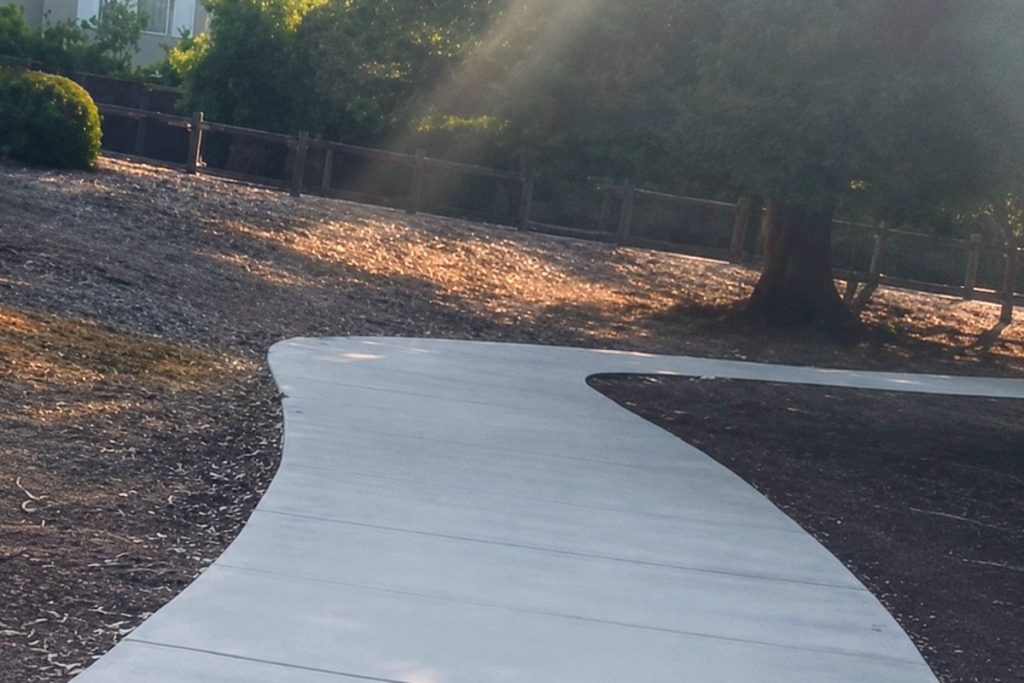
“You’re doing it!” my son calls, and he means his daughter, and he is right. She is wobbling down a sunlit sidewalk into her own life, astonished by the gift of balance she cannot explain.
But the words pass her. They cross the streamers and the little basket and travel twenty-five hundred miles east, and they reach me. Because I am on the sidewalk too. I always was.
The same ground that holds her has been under me the whole way, through every year I thought I was the one doing the holding.
I am doing it. I have been doing it all along, steadied by something I cannot see.
“I can’t believe I’m actually doing it,” she cries out.
Neither can I.
Neither can I.
If this reflection spoke to you, I hope you’ll also take a few moments to read A stitch in time, an earlier essay on the moment that shaped my years in medicine. For more on the migraines described here, the American Headache Society is a trusted resource.